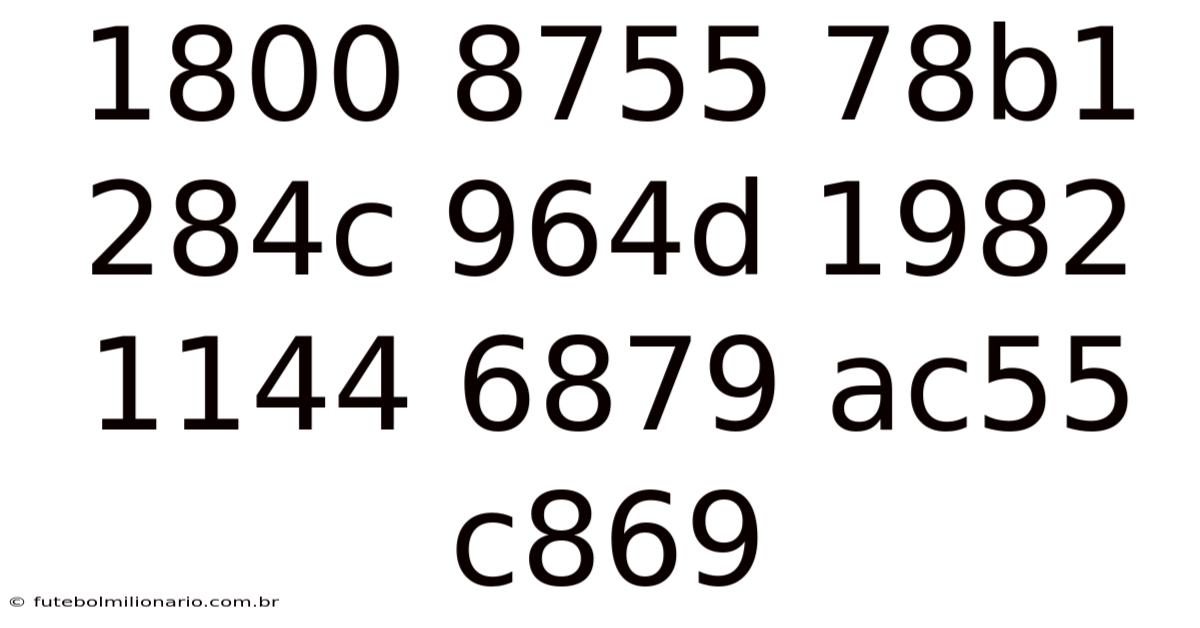
Understanding the Technical Sequence: 1800 8755 78b1 284c 964d 1982 1144 6879 ac55 c869
Introduction
The sequence 1800 8755 78b1 284c 964d 1982 1144 6879 ac55 c869 represents a complex hexadecimal string that appears in various technical contexts, particularly in computing, cryptography, and digital systems. Still, this alphanumeric combination serves multiple purposes across different domains, from memory addressing to unique identifier generation. Understanding what this sequence represents requires examining its components, structure, and potential applications in modern technology The details matter here..
Breaking Down the Components
Hexadecimal Foundation
The sequence primarily consists of hexadecimal values, which use a base-16 numbering system. Unlike the decimal system (base-10) that uses digits 0-9, hexadecimal incorporates additional characters:
- Digits 0-9 represent values zero through nine
- Letters A-F (or a-f) represent values ten through fifteen
This system is fundamental in computer science because it provides a more human-readable representation of binary code, which computers use internally Which is the point..
Analyzing Each Segment
Let's examine each part of the sequence individually:
- 1800 - This could represent a memory address, port number, or configuration value
- 8755 - Another numerical value that might indicate a specific parameter or setting
- 78b1 - A hexadecimal value that could relate to color codes, memory locations, or checksums
- 284c - Potentially a memory reference or encoded data segment
- 964d - Might represent a timestamp component or identifier portion
- 1982 - Could be a year reference, version number, or sequential identifier
- 1144 - Often used in technical contexts for specific measurements or codes
- 6879 - May relate to ASCII values or encoded information
- ac55 - Common in hexadecimal sequences representing various technical parameters
- c869 - Final segment that could complete a larger addressing scheme
Technical Applications and Contexts
Memory Addressing Systems
In computer architecture, sequences like this often appear in memory addressing. When a computer processes data, it assigns specific memory locations to store information temporarily. The hexadecimal format makes it easier for programmers and systems to reference these locations efficiently.
Here's one way to look at it: 78b1 and c869 might represent actual memory addresses where specific data is stored during program execution. This addressing system becomes crucial when dealing with low-level programming languages like C or assembly language.
Cryptographic Hash Functions
Another significant application involves cryptographic hash functions. Many security protocols generate unique identifiers using hexadecimal strings. While the specific sequence provided doesn't appear to be a standard cryptographic hash, similar patterns are used in:
- Digital signatures
- Data integrity verification
- Blockchain transactions
- Password hashing systems
Unique Identifier Generation
Systems frequently require unique identifiers for databases, network connections, or device recognition. The combination of numbers and letters in this sequence suggests it could function as part of a larger identification system, potentially serving as:
- Database record keys
- Session identifiers
- Device fingerprints
- Transaction references
Practical Implementation Examples
Network Configuration
In networking environments, hexadecimal sequences often appear in:
MAC addresses: 00:1A:7D:DA:71:13
IP configurations: Various subnet masks and routing tables
Protocol headers: TCP/IP packet structures
The segments 1800 and 8755 might represent port numbers or protocol identifiers in such contexts.
Programming Language Integration
Different programming languages handle hexadecimal values differently:
- C/C++: Uses
0xprefix (e.g.,0x78b1) - Python: Supports both
0xprefix and built-in conversion functions - JavaScript: Handles hexadecimal in string formatting and color representations
- Java: Integrates hexadecimal in memory management and object references
Data Storage and Retrieval
When databases store binary large objects (BLOBs) or perform indexing operations, hexadecimal representations become essential. The sequence might represent:
- Compressed data chunks
- Encrypted file segments
- Index pointers in database structures
- Cache memory references
Security Considerations
Potential Vulnerabilities
While hexadecimal sequences themselves aren't inherently dangerous, their misuse can create security vulnerabilities:
- Predictable patterns: If sequences follow predictable patterns, attackers might exploit them
- Insufficient entropy: Low randomness in generated identifiers compromises security
- Hardcoded values: Embedding sensitive sequences in source code creates exposure risks
Best Practices
To maintain security when working with hexadecimal sequences:
- Use cryptographically secure random number generators
- Implement proper salting techniques for hash-based applications
- Regularly rotate identifiers and keys
- Apply appropriate access controls and encryption layers
Real-World Scenarios
Database Management
Consider a scenario where a database administrator encounters this sequence in log files. Each segment might represent:
- Transaction IDs: Tracking specific database operations
- Error codes: Identifying particular system issues
- Connection parameters: Managing client-server communications
- Backup references: Linking to specific backup instances
Embedded Systems
In embedded device programming, such sequences commonly appear in:
- Firmware version tracking
- Hardware register configurations
- Diagnostic code implementations
- Communication protocol specifications
Web Development Context
Modern web applications apply hexadecimal values extensively:
- CSS color codes: Representing visual design elements
- API endpoints: Identifying specific service routes
- Authentication tokens: Securing user sessions
- Content delivery networks: Managing resource distribution
Troubleshooting Common Issues
Recognition Problems
When systems fail to properly interpret hexadecimal sequences, common issues include:
- Case sensitivity conflicts: Mixing uppercase and lowercase letters
- Formatting inconsistencies: Missing separators or incorrect spacing
- Encoding mismatches: Different character set interpretations
- Length limitations: Truncation in storage or transmission
Resolution Strategies
To address these challenges:
- Standardize formatting conventions across systems
- Implement validation routines for input processing
- Use consistent encoding standards (UTF-8 recommended)
- Establish clear documentation for sequence interpretation
Future Implications
As technology evolves, hexadecimal sequences like 1800 8755 78b1 284c 964d 1982 1144 6879 ac55 c869 will continue playing vital roles in:
- Quantum computing: New computational paradigms may require extended hexadecimal representations
- Internet of Things (IoT): Massive device networks need reliable identification systems
- Artificial intelligence: Machine learning models generate and process vast amounts of hexadecimal data
- Blockchain technology: Distributed ledger systems rely heavily on hexadecimal-based cryptography
Conclusion
The sequence 1800 8755 78b1 284c 964d 1982 1144 6879 ac55 c869 exemplifies the fundamental importance of hexadecimal representation in modern computing. Whether functioning as memory addresses, cryptographic elements, or unique identifiers, such sequences form the backbone of digital infrastructure. Understanding their structure, applications, and implications enables developers, system administrators, and security professionals to build more dependable and efficient technological solutions Worth keeping that in mind..
By recognizing the patterns and purposes behind hexadecimal sequences, we gain deeper insights into how digital systems communicate, store information, and maintain security. As technology continues advancing, these foundational concepts remain essential for anyone working within the digital realm, ensuring reliable performance and secure operations across all computing platforms.
